Train Miner: Idle Railway Game
CASUAL AZUR GAMESSimulation
4.29.02K Reviews
- Version
- 5.2.2
- Installs
- 10.00M
- Age Rating
- Everyone
Screenshots
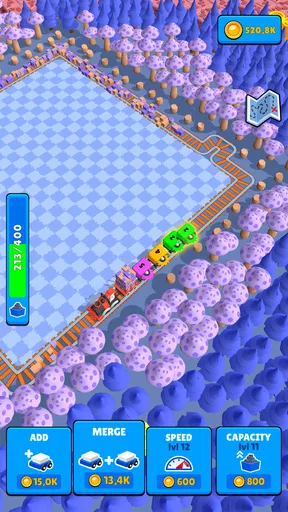
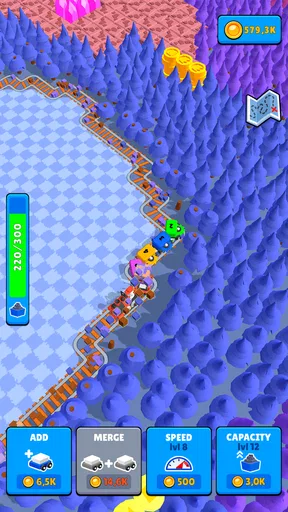
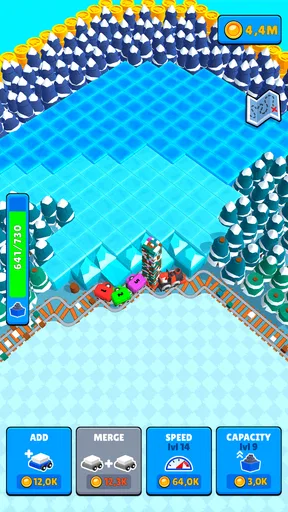
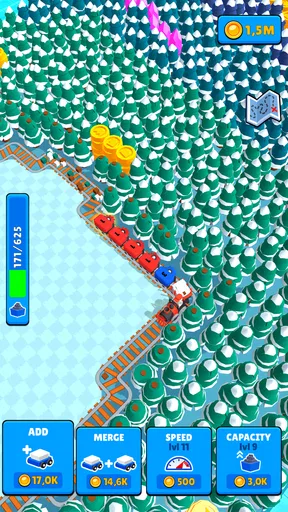
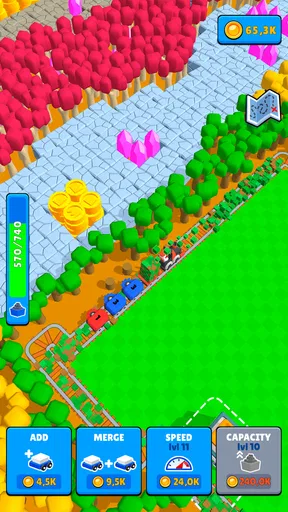
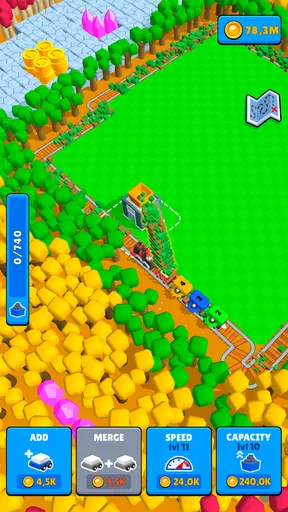
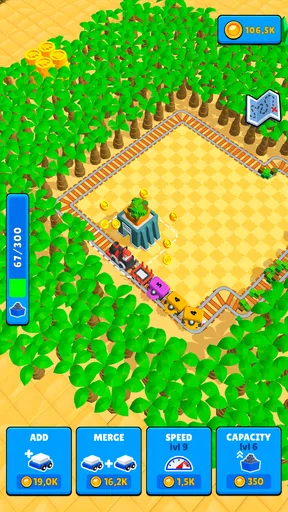
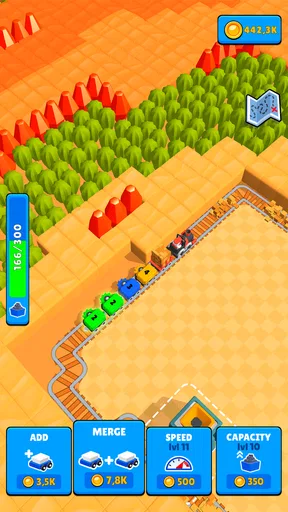
Our Review of Train Miner: Idle Railway Game
 Analysis by Appyee
There is a particular pleasure in watching a small railway operation grow into something more capable, one trip and upgrade at a time. That steady rhythm is the main appeal of Train Miner: Idle Railway Game: it gives me a light management task to return to between other things, rather than demanding a long, uninterrupted session. The train theme gives its idle progression a clearer identity than a generic coin-building game, though the experience is best suited to players who enjoy gradual growth.
A casual railway game with a clear loop
Made by CASUAL AZUR GAMES, Train Miner is a free simulation game for players who like a mix of collecting, expanding, and checking in on progress. The basic loop is easy to grasp: trains travel, resources are gathered, and earnings can go back into making the operation more productive. That makes it approachable if you have not played many idle games, while the accumulating upgrades give you a reason to think about what to improve next.
The current release is version 4.5.6, and the game has been available since March 3, 2023. That gives it an established place in the casual simulation space, rather than the feel of a brand-new experiment. Its audience is substantial too, with over 10 million installs and a 4.4 average from around 179,000 ratings. Those figures are useful context, but they do not tell you whether its pacing or hands-on level will suit you; the best clue is whether you enjoy watching a system grow through repeated small investments.
The game is rated Everyone and works on Android 7.0 or later. There is no purchase price to get started, although optional in-app purchases range from $0.99 to $99.99 per item. I would treat those as a reason to be deliberate, not as a reason to spend: the central attraction is the gradual build-up, so take time to see whether you enjoy that loop before considering any purchase.
How the railway develops over time
I find that a railway-building game is most enjoyable when progress gives me a reason to make a fresh choice, not just collect and spend on autopilot. This section looks at how I’d pace those decisions over several visits, including a practical way to keep upgrades tied to a goal. From there, I’ll consider what the game’s current version can—and cannot—tell returning players about its evolution.
Building and expanding your empire
As you progress, you’ll find that expanding your railway empire is both challenging and rewarding. You start with a single train, but as you mine more resources and earn coins, you can purchase additional trains, upgrade their speed and capacity, and expand your network to new cities. The game has a neat balance of strategy and idle mechanics that keep you engaged without feeling pressured.
One thing I particularly enjoyed was the ability to customize trains and stations. It adds a personal touch to the game, allowing you to make your empire truly your own. Plus, watching your trains chug along the tracks, transporting goods and passengers, is surprisingly satisfying.
Mining resources and choosing what to improve
Mining is a core aspect of the game, and it’s where the idle elements really shine. Your trains automatically mine resources as they travel, and you can invest in upgrades to increase their efficiency. The more resources you gather, the more profit you make, which you can then reinvest into your railway network.
The game offers a variety of resources to collect, each with its own value. Strategically deciding which resources to focus on can significantly impact your progress. I found myself constantly checking back to see how my mining operations were doing and planning my next moves.
What the upgrade loop rewards
A useful way to approach the early game is to make each return visit purposeful. Rather than tapping through upgrades simply because they are available, I’d first decide whether I want quicker progress, more carrying capacity, or a broader operation. The speed-and-capacity choices described in the game’s progression point to different kinds of efficiency: one favors getting resources moving sooner, while the other can make each run more productive. I would compare their effects in play instead of assuming one upgrade is always best.
This is also where patience matters. Idle games can make small gains feel like a reason to check in repeatedly, but that does not mean every short break needs to become a session. I find the loop more enjoyable when I return with a simple goal—such as saving toward an expansion—then stop once I have made a meaningful decision. That keeps the management side satisfying without turning the game into a constant interruption.
Fits into brief breaks, with a trade-off
A realistic use case is opening the game during a lunch break, collecting what has accumulated, and spending a minute deciding which improvement will help the railway next. It can also suit a quiet commute as a low-pressure distraction, provided you are not trying to play while doing something that needs your attention. The appeal is that the railway can feel like a continuing project even when you are not actively planning every moment.
That convenience comes with a familiar idle-game trade-off: if you want frequent surprises, demanding challenges, or direct control over every train movement, the routine may feel repetitive. Train Miner is more about the satisfaction of gradual development than a sequence of complicated decisions. For a player who wants a richer transport-management simulation, a game with more detailed route planning would likely be a better fit; for quick check-ins and visible progress, this lighter approach makes more sense.
How it compares with other simulation games
Compared with hands-on railway simulators, Train Miner puts less emphasis on operating a train moment by moment and more on managing a growing system. Compared with broad idle games, its trains, mining, and network give the progression a concrete theme. That middle ground is its strongest point: I can enjoy the feeling of running a railway without needing to learn a complex transport-planning interface.
The trade-off is depth. If you want to solve detailed logistics problems, coordinate routes, or make every journey a tactical challenge, this is not the option I would choose. Its more relaxed structure is better for people who want progress to continue through repeatable actions. Likewise, someone who dislikes waiting for incremental gains may be happier with a strategy game that offers more immediate decisions and less emphasis on accumulating resources.
Small decisions that make sessions more useful
One practical habit is to choose a target before spending your earnings. If your goal is to widen the network, avoid scattering resources across upgrades that do not bring you closer to that expansion. If you are trying to improve the flow of the operation, compare speed and capacity in light of what is currently slowing you down. This kind of simple prioritizing gives the game’s management layer more purpose without requiring a spreadsheet or a long planning session.
I would also avoid judging progress by a single visit. The appeal of an idle structure is cumulative, so a short session that seems uneventful can still fit into a longer pattern of building up. On the other hand, if you repeatedly open it and feel that you are only collecting and buying the same kind of improvement, that is a useful sign that the game’s pace may not be for you. Recognizing that early is better than treating every slow stretch as a problem you need to solve by spending.
What returning players should keep in mind
For existing players, the current version number shows that the game has moved through multiple releases since it first arrived, but a version number alone does not explain what changed or how those changes affect a particular save. I would focus on what you can judge directly in your own play: whether the current upgrade choices keep your next goal clear, whether the pace still feels comfortable, and whether the railway remains enjoyable to check on. New players can use the same test before committing to a longer routine.
As the game continues to evolve, the most useful things to watch are the feel of progression and how clearly the game communicates the value of its upgrades. Those are more relevant to everyday enjoyment than simply seeing a higher version number. I would also keep optional purchases separate from the basic question of whether the game is fun: decide first whether you like its rhythm, and only then consider whether any paid item is worth it to you.
Building and expanding your empire
As you progress, you’ll find that expanding your railway empire is both challenging and rewarding. You start with a single train, but as you mine more resources and earn coins, you can purchase additional trains, upgrade their speed and capacity, and expand your network to new cities. The game has a neat balance of strategy and idle mechanics that keep you engaged without feeling pressured.
One thing I particularly enjoyed was the ability to customize trains and stations. It adds a personal touch to the game, allowing you to make your empire truly your own. Plus, watching your trains chug along the tracks, transporting goods and passengers, is surprisingly satisfying.
Mining resources and making profit
Mining is a core aspect of the game, and it’s where the idle elements really shine. Your trains automatically mine resources as they travel, and you can invest in upgrades to increase their efficiency. The more resources you gather, the more profit you make, which you can then reinvest into your railway network.
The game offers a variety of resources to collect, each with its own value. Strategically deciding which resources to focus on can significantly impact your progress. I found myself constantly checking back to see how my mining operations were doing and planning my next moves.
Graphics and soundtrack
Visually, the game is charming. The graphics are colorful and vibrant, with a style that’s both modern and nostalgic. It reminds me of classic railway games but with a fresh, updated look. The animations are smooth, and watching the trains move along the tracks is a delight.
The soundtrack is another highlight. It’s upbeat and perfectly matches the tempo of the game. The sound of trains chugging and the background music create an immersive experience that keeps you hooked. It’s one of those games where you might find yourself playing longer than you initially intended.
A few questions worth answering before you play
Do you need to know railway systems to enjoy it? I don’t think so. The game’s core idea is simple enough for a newcomer to follow, and the tutorial gets you started without burying you in instructions. The appeal comes from managing the growth of the operation, not from having specialist knowledge of trains.
Is it a good choice for a long, focused gaming session? It can be, if you enjoy checking upgrades and planning how to spend resources, but I see it primarily as a casual game for shorter visits. If you want sustained challenge and constant interaction, its idle rhythm may leave you wanting more. A more demanding simulation would be a better match for that mood.
Should you spend money to make progress? I would start free and decide based on how the game feels over time. Optional purchases are available, but they are not the reason I would recommend it. The most sensible approach is to enjoy the regular progression first and treat any purchase as a personal choice, not a requirement for getting started.
Will it suit someone who wants a realistic railway simulator? Probably not as well as a title built around detailed driving or route operations. Train Miner’s strength is the accessible combination of trains, mining, and gradual expansion. If that is what you want, the lighter presentation is a benefit; if realism and detailed control are your priorities, look elsewhere.
Final thoughts
In a sea of idle games, Train Miner: Idle Railway Game stands out with its unique blend of strategy, management, and idle mechanics. It’s perfect for anyone looking for a casual gaming experience that still offers depth and engagement. Whether you’re a train enthusiast or just someone looking for a fun way to pass the time, this game has something to offer.
Overall, I’d say it’s definitely worth a download. Just be prepared to lose track of time as you build and manage your railway empire. And trust me, once you get started, you’ll be hooked!
If you’re ready to hop on board, you can find Train Miner: Idle Railway Game in the app store. Happy mining, and may your trains run smoothly!
Verdict
Strengths of Train Miner: Idle Railway Game
- Engaging idle gameplay mechanics.
- Colorful and appealing graphics.
- Various upgrades keep it exciting.
- Easy to learn and play.
- Regular updates with new content.
Limitations of Train Miner: Idle Railway Game
- Repetitive tasks may become tedious.
- Requires internet for full features.
- In-app purchases can be pricey.
- Lacks a competitive multiplayer mode.
- Occasional ads disrupt gameplay.
Other Releases by CASUAL AZUR GAMES
View All
Worms Zone .io - Hungry Snake
Action4.3

Stack Ball - Crash Platforms
Arcade4.5

STAR: Super Tricky Amazing Run
Arcade4.2

State.io — Conquer the World
Strategy4.1
Similar Picks in This Category
View All
Truckers of Europe 3
Wanda Software4.3

Town Building Life Simulator
XGame Global4.2

Fidget Toys Trading・Pop It 3D
Freeplay Inc4.7

Sculpt People
CrazyLabs LTD4.4

Scary Teacher 3D
Z & K Games4.2

Hair Tattoo: Barber Shop Game
CASUAL AZUR GAMES4.3
Frequently Asked Questions
What is the main objective in Train Miner: Idle Railway Game?
In Train Miner: Idle Railway Game, the primary objective is to build and expand your railway empire. Players start with a small train and gradually upgrade their fleet, unlock new routes, and manage resources effectively to maximize profits. The game combines elements of strategy and idle gameplay, allowing you to progress even when offline.
How does the idle mechanic work in Train Miner?
The idle mechanic in Train Miner allows your trains to keep running and earning resources even when you're not actively playing the game. This feature is perfect for players who enjoy making progress without constant engagement. You can return to the game to collect earnings, upgrade your trains, and expand your railway network.
Are there in-app purchases in Train Miner: Idle Railway Game?
Yes, Train Miner offers in-app purchases that provide various benefits, such as speed boosts, exclusive trains, and additional resources. While these purchases can enhance your gameplay experience, they are not necessary to enjoy the game. Players can still progress through strategic planning and effective resource management without spending real money.
What platforms is Train Miner: Idle Railway Game available on?
Train Miner: Idle Railway Game is available for both Android and iOS devices. You can download it from the Google Play Store or the Apple App Store. The game is designed to run smoothly on a variety of devices, ensuring a seamless gaming experience for most users.
Can I play Train Miner: Idle Railway Game offline?
Yes, Train Miner can be played offline, making it a great option for those who want to enjoy gaming without an internet connection. While offline, your trains will continue to earn resources, which you can collect when you reconnect. However, certain features, such as in-app purchases or leaderboards, may require an internet connection.
Play our best games!


